The Saussurea Alpine Botanical Garden
Europe's highest garden, at the foot of Mont Blanc.
Estimated reading time
5
At an altitude of 2,175 meters on the Pavillon du Mont Fréty, reachable via the Skyway Monte Bianco cable car: Saussurea is the fourth and most spectacular of Aosta Valley’s alpine botanical gardens.
There is a place in the Aosta Valley where you walk among flowers with Mont Blanc behind you. A place reachable only by cable car, where snow remains until mid-June and the growing season lasts barely two or three months. A place that, at 2,175 meters above sea level, holds an absolute record: it is the highest alpine botanical garden in Europe. It is called Saussurea, and its name tells the whole story.
The Name and History
The garden owes its name to a plant, Saussurea alpina, dedicated to the Genevan scientist Horace-Bénédict de Saussure, promoter of the first ascent of Mont Blanc in 1786. A name that intertwines botany and the history of mountaineering, alpine flora, and the conquest of peaks: two of the most fascinating stories of the Aosta Valley Alps told in a single word.
In 1984, the Donzelli, Gilberti, and Ferretti Foundation was established in Courmayeur to study and enhance the flora of Europe’s highest mountain, Mont Blanc. The first concrete initiative was the creation of an alpine garden right at the foot of this imposing massif. The garden was inaugurated in 1987, and over time, research and species protection took priority over tourism. Today, it is managed by the Saussurea Onlus Foundation.
The Location: A Balcony Overlooking Mont Blanc
The Saussurea Alpine Botanical Garden is situated at 2,175 meters at the foot of Mont Blanc, on the glacial promontory called Mont Fréty overlooking the Courmayeur basin.
The Pavillon du Mont Fréty is a natural terrace overlooking the villages of Entrèves and downtown Courmayeur. Looking toward France, you can observe Val Veny with the characteristic Miage Glacier. Toward Switzerland, you see the flat Val Ferret at the foot of the Grandes Jorasses. To the south, other Aosta Valley mountains are visible: Ruitor, Gran Paradiso, and Grivola.
It is one of the most extraordinary views in the Western Alps, and the botanical garden is an integral part of it.
Botanical Heritage
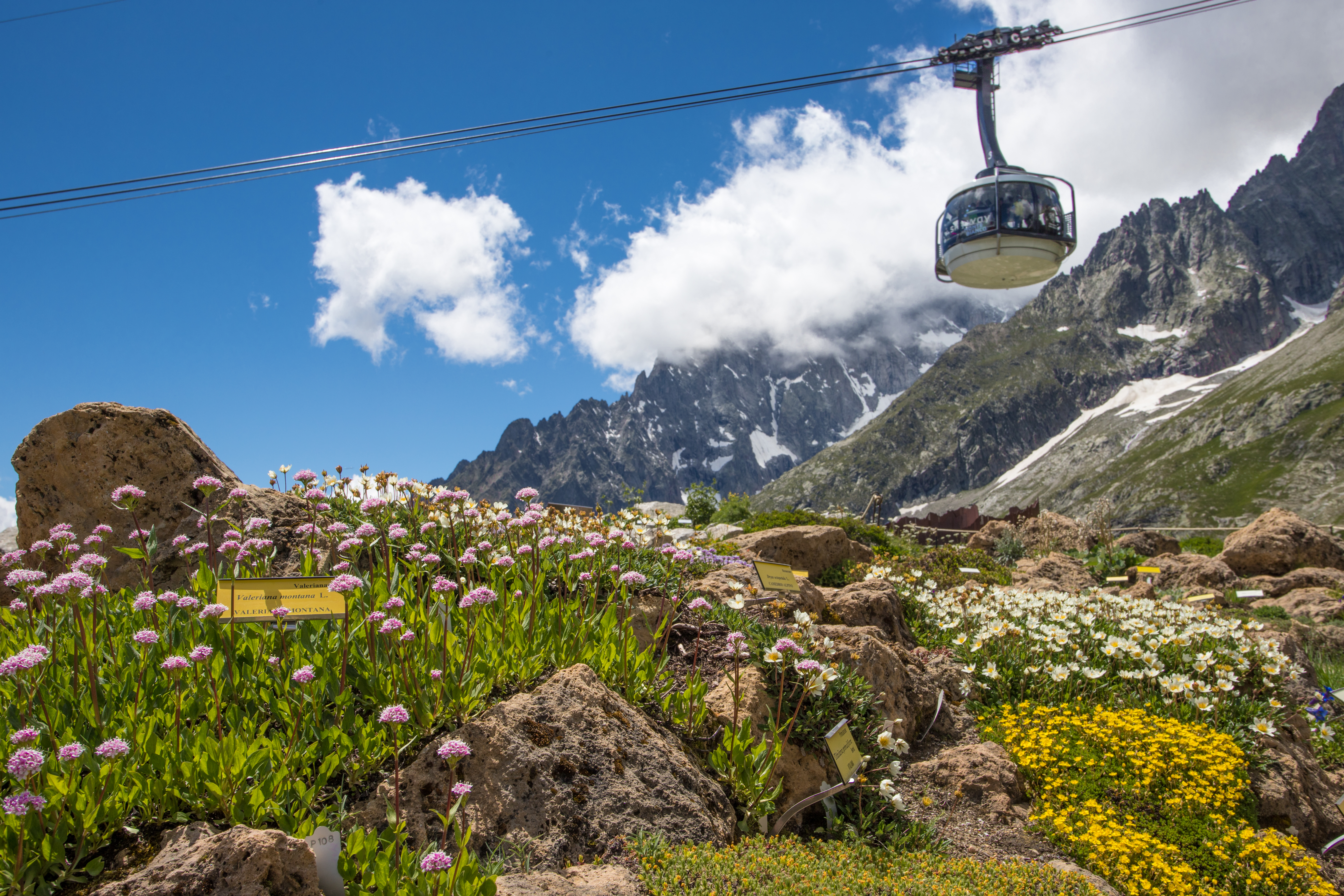
The Saussurea Alpine Botanical Garden hosts about 900 species on terrain of morainic origin, partially covered by an ancient rockfall of large granite boulders that give the garden a varied topography. The garden’s rockeries display plants organized by geographical origin: from local Aosta Valley flora to that of the Western and Eastern Alps, up to exotic species.
Each plant is labeled with its scientific and common names, as well as its botanical family: yellow tags for Italian species, red for medicinal species, a skull icon for poisonous or toxic plants, and white for exotic plants. Aosta Valley species are near the entrance: the Edelweiss, Martagon Lily, and Trionfetti’s Cornflower are key examples.
Various typical mountain environments of the Mont Blanc area have been reconstructed inside the garden: scree slopes, snowbeds, peat bogs, and alpine meadows. Each environment includes explanatory panels illustrating ecological features and characteristic species.
How to Reach It
Saussurea is located in Courmayeur, at Pavillon du Mont Fréty (2,175 meters altitude), near the first station of the Skyway Monte Bianco cable car. The easiest and most spectacular way to get there is by taking the Skyway cable car, which departs from Pontal d’Entrèves and goes up to Punta Helbronner at 3,564 meters. The garden entrance ticket is included in the Skyway Monte Bianco ticket.
Alternatively, the garden can be reached on foot from the La Palud refuge in Courmayeur via trail number 20, a hike of about 2 hours and 30 minutes.
The Saussurea Alpine Garden is open from June 20 to September 20, from 9:00 AM to 5:00 PM, with extended hours until 5:30 PM in July and August. The peak blooming period ranges from late July to mid-August.
The Four Aosta Valley Botanical Gardens: A Unique Network
Saussurea completes the network of four alpine botanical gardens in the Aosta Valley, along with Chanousia at Little St Bernard Pass, Paradisia in Cogne, and the Castel Savoia garden in Gressoney-Saint-Jean. The JardinAlps project connects them into an extended network spanning the French and Maritime Alps.
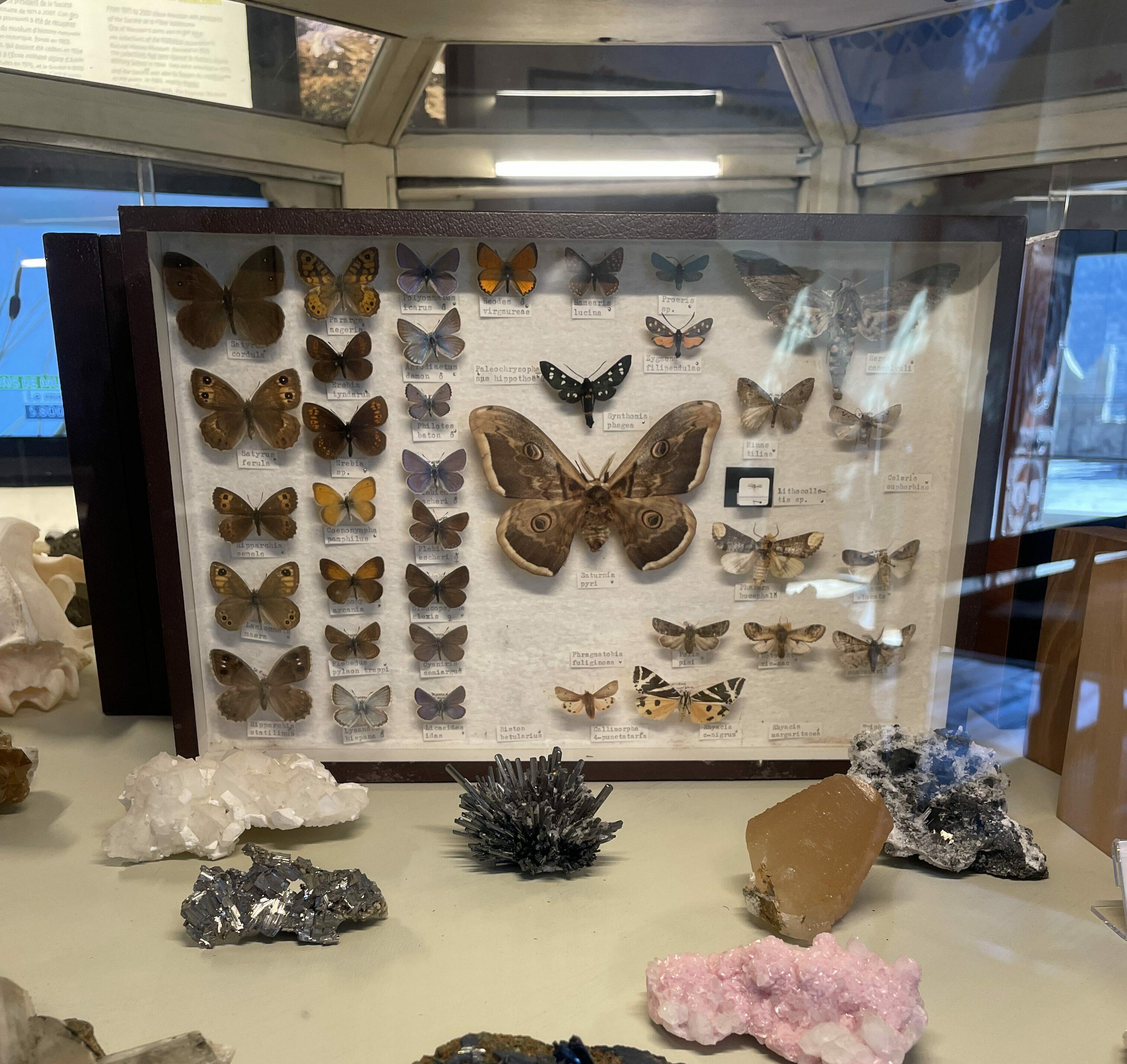
Four gardens, four different stories, four ways to convey the extraordinary botanical biodiversity of the Aosta Valley Alps—a biodiversity that the Efisio Noussan Regional Museum of Natural Sciences in Saint-Pierre studies, preserves, and shares daily through its collections and research laboratories.
Visiting the Saint-Pierre Museum and then taking the Skyway up to Saussurea makes for a complete journey: from scientific knowledge of alpine nature to its highest expression, literally, on the slopes of Mont Blanc.
Photo: Archive RAVA