Stoat and Snow Vole in the Italian Alps
An International Study Projects Their Future Through 2100
Estimated reading time
6
Published in Mammal Research, the paper by Granata et al. (2026) models for the first time the current and future distribution of two key alpine species under climate change scenarios. The Aosta Valley is among the territories analyzed.
A new scientific study published in the international journal Mammal Research (Granata et al., 2026) models for the first time the current and future distribution of the stoat (Mustela erminea) and the snow vole (Chionomys nivalis) across the entire Italian Alpine range, projecting their evolution through 2100 under two distinct climate scenarios. Among the institutions that contributed species occurrence data is the Autonomous Region of Aosta Valley.
The study: objectives and methodology
The research was conducted by an international group of researchers from the University of Turin, Gran Paradiso National Park, MUSE – Trento Science Museum, and other alpine protected area management bodies, through a collaborative network involving institutions, parks, museums, and open-source databases from across the Italian Alps.
The study used Species Distribution Models—statistical models that relate species occurrence records to environmental variables—to estimate current distributions and project future ones under two CMIP6 scenarios: SSP3-7.0, an intermediate scenario, and SSP5-8.5, the high-emissions scenario. The final dataset integrated 956 stoat records and 222 snow vole records collected between 2000 and 2024.
Stoat and snow vole: a close ecological relationship
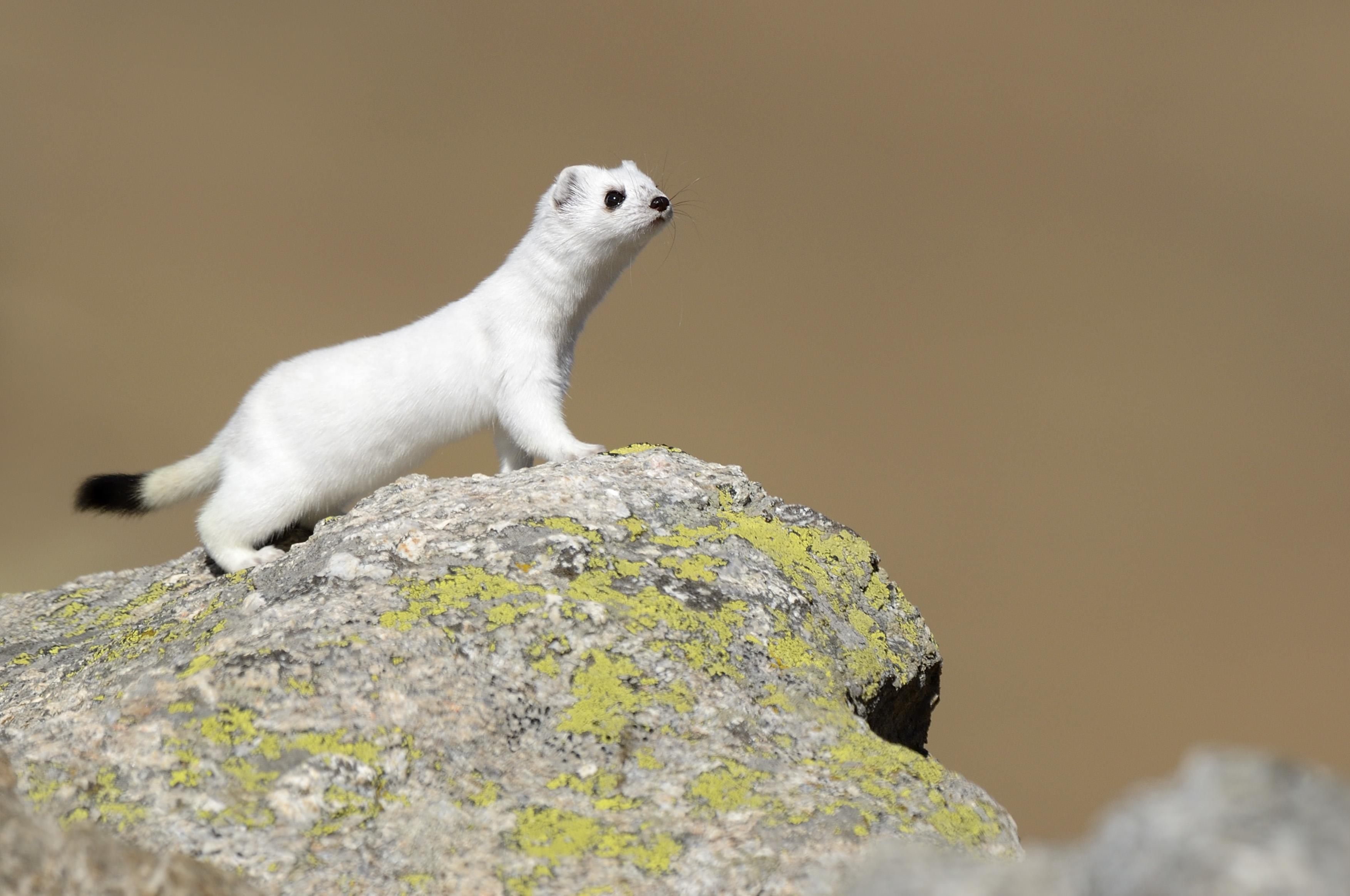
The stoat is a small mustelid adapted to high elevations, with a biological characteristic that makes it particularly vulnerable to climate change: its white winter coat, which allows it to blend into the snow and avoid predators. As snow cover declines, this camouflage becomes less effective, exposing the stoat to an increasing risk of predation.
In the Italian Alps, the stoat depends heavily on the snow vole as its primary prey. The two animals are so closely linked that the study modeled them together, including the snow vole’s distribution as a predictive variable in modeling the stoat’s distribution. The two most important factors influencing the stoat’s distribution were the duration of snow cover (38.8% of the model variance) and the presence of the snow vole (25.7%), which together explain more than 64% of the entire model.
The results: concerning scenarios for the stoat
The models predict a significant contraction of the stoat’s range in the Italian Alps by 2100. Under the intermediate scenario (SSP3-7.0), the estimated reduction is about 15% compared with the current distribution; under the high-emissions scenario (SSP5-8.5), the contraction reaches 36%, accompanied by an upward shift in elevation of between 144 and 214 meters compared with the current distribution.
By contrast, the snow vole is projected to expand its range under both scenarios, with estimated increases between 77% and 110%, mainly toward the north. This spatial mismatch between predator and prey could profoundly alter the ecological dynamics of high-altitude alpine ecosystems, with cascading effects throughout the entire food web.
The most pronounced contractions for the stoat are expected in the Maritime and Cottian Alps and across much of the Eastern Alps. Moderate expansions are expected only in isolated areas of the Dolomites and at the highest elevations of the Aosta Valley.
Focus on the Aosta Valley
Under the most optimistic scenario, the Aosta Valley emerges as one of the territories where the stoat could maintain or moderately increase its distribution at higher elevations. The region hosts some of the most intact high-altitude environments in the Western Alps—from Gran Paradiso National Park to Mont Avic Natural Park—which represent potential climate refuges for cold-adapted species.
However, the study emphasizes that existing protected areas may not be sufficient to contain the effects of climate change on alpine biodiversity at the projected pace and scale, making it necessary to strengthen conservation and monitoring strategies at the regional level.
The stoat as a sentinel species
The study proposes the stoat as a potential sentinel species for alpine climate change: its strong dependence on snow, its trophic relationship with the snow vole, and the rapidity of its demographic responses make it an early and sensitive indicator of ongoing changes in mountain ecosystems. The researchers recommend implementing long-term monitoring programs and adopting innovative tools such as Alpine Mostelas—enclosed camera traps specifically designed for small alpine mustelids—to improve the systematic collection of data.
Bibliographic reference
Granata M., Cattaneo M., Calderola S., Deflorian M.C., Martinelli L., Maurino L., Di Febbraro M., Bertolino S. (2026). Snow loss and prey shift may threaten alpine stoats under climate change. Mammal Research, 71:57. https://doi.org/10.1007/s13364-026-00878-6
Photo: Aosta Panoramica