The mines of the Aosta Valley
History, heritage and industrial tourism as told by Gallery 5
Estimated reading time
6
From the mines of Cogne to the side valleys: Room 5 of the Efisio Noussan Regional Museum of Natural Sciences traces the history of mining in the Aosta Valley and shows where you can experience it for yourself.
There is a side to the Aosta Valley that cannot be seen from the ski slopes or high-altitude trails. It lies hidden beneath the mountains, in the tunnels dug over centuries of gruelling labour, in the abandoned industrial structures that dot the region’s side valleys. This is the mining Aosta Valley, home to one of the oldest and most significant mining traditions in the western Alps.
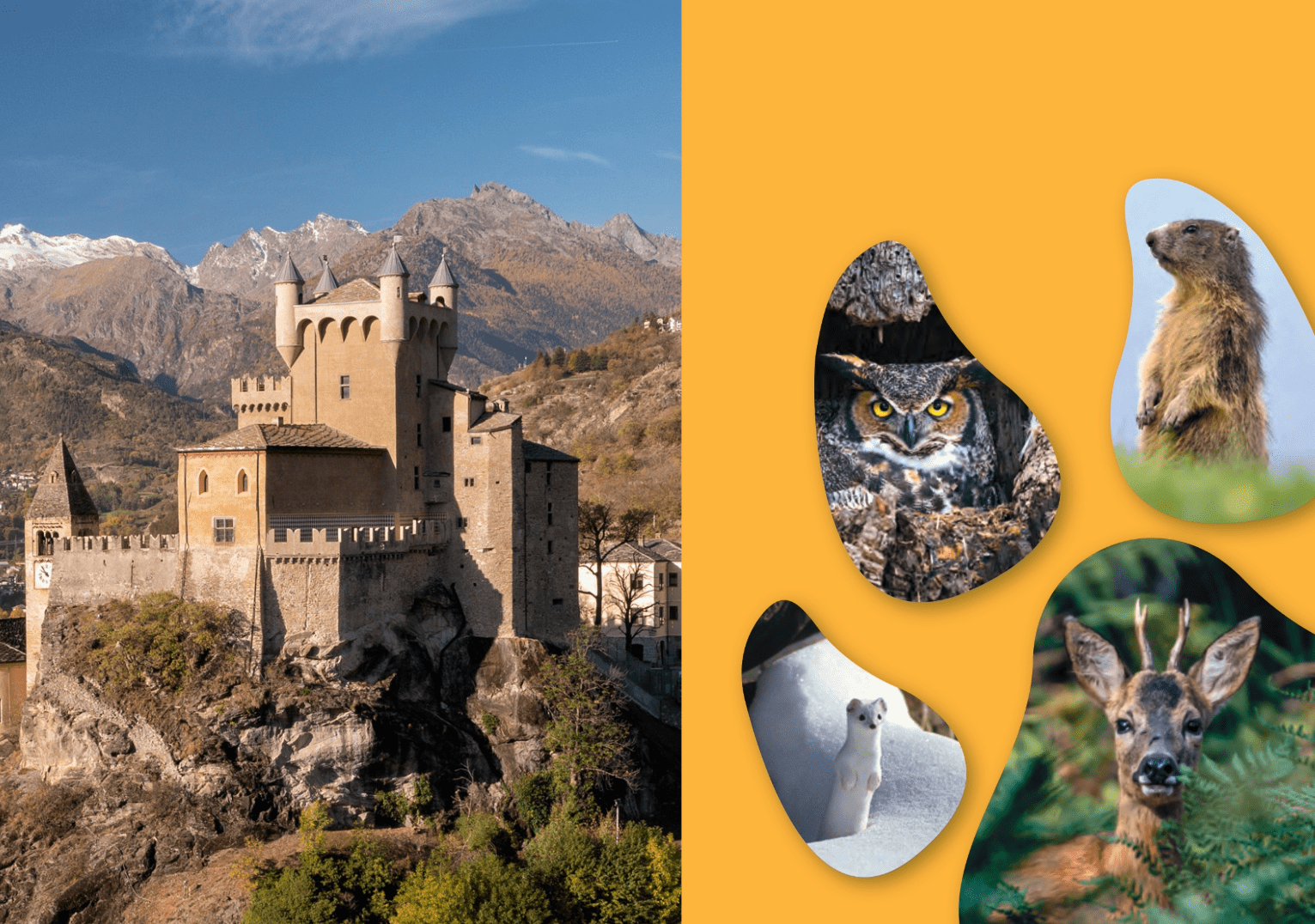
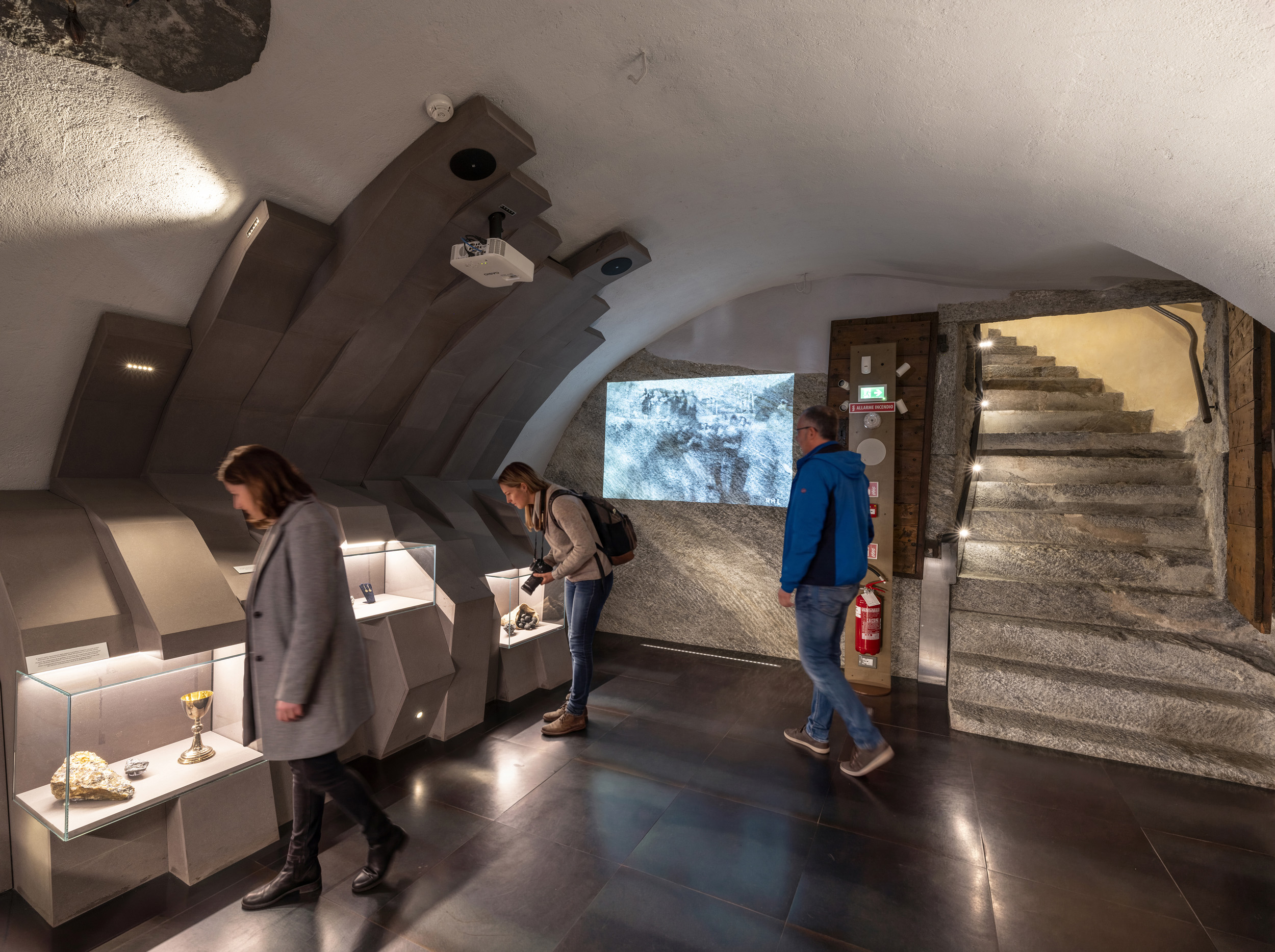
Room 5 of the Efisio Noussan Regional Museum of Natural Sciences in Saint-Pierre is dedicated to this history.
A thousand-year-old tradition
Mining in the Aosta Valley has ancient roots. The earliest evidence of mining dates back to Roman times, when the Aosta Valley Alps were already recognised as a region rich in precious minerals. During the Middle Ages and the modern era, mining gradually intensified, involving an increasing number of valleys and local communities.
The Aosta Valley mining system spanned a vast area: from the famous magnetite mines at Cogne, to the anthracite mines at La Thuile, the manganese mines at Saint-Marcel, and the native gold mine at Brusson. Each site had its own geological characteristics, its own mining techniques and its own social history.
The Cogne mines: the heart of the Aosta Valley’s mining industry
The most important and symbolic site of the entire Aosta Valley mining tradition is that of Cogne, in the valley of the same name south of Aosta. The mines of Cogne were among the largest in Italy for the extraction of magnetite: the deposit, discovered in medieval times and intensively exploited from the 19th century onwards, reached its peak productivity during the 20th century, when it was linked to the steelworks in Aosta by a cableway stretching over 20 kilometres.
Mining activity in Cogne profoundly shaped the landscape and society of the Aosta Valley for over a century. A veritable industrial village developed around the mines, complete with workers’ housing, offices, warehouses and service facilities. Thousands of families built their lives around that hard and dangerous underground work, which required specific technical skills passed down from generation to generation.
The closure of the mines, which took place gradually between the 1970s and 1980s due to the depletion of the richest veins and international competition, marked the end of an era. But not the end of the story.
The transformation: from work to remembrance
As highlighted on the display panel in Room 5 of the Museum, the miners’ epic is now being transformed into an occasion for remembrance and a tourist attraction. The mining sites of the Aosta Valley have been progressively restored and promoted as cultural and industrial heritage, offering visitors the chance to engage with a history that lies at the very heart of the region’s identity.
The Cogne Mining Village is now one of the most fascinating examples of industrial archaeology in the Aosta Valley. The original structures of the mining facilities have been preserved and made accessible to the public through guided tours that take visitors inside the tunnels, explaining the mining techniques, working conditions and daily life of the miners.
Where to go: the Cogne Mining Village
For those who wish to put what they have learnt into practice outside the museum, the Cogne Mining Village is the obvious choice. Located in the municipality of Cogne, in the Aosta Valley, around 27 kilometres from Aosta, the site is fully accessible from June and offers guided tours through the original tunnels. The cool temperatures inside the mines, which remain constant all year round at around 7–8 degrees, make a visit particularly pleasant during the summer months.
Room 5 at the Saint-Pierre Museum
Room 5 of the Museum provides the historical and scientific context needed to fully understand what can be observed in the field: the geology of the deposit, mining techniques, and the relationship between mining and the Aosta Valley landscape. These are two complementary experiences that enrich one another.
Photo: RAVA Archive